
Congo's $90 Oil Price Threshold Aims to Strengthen Upstream Investment
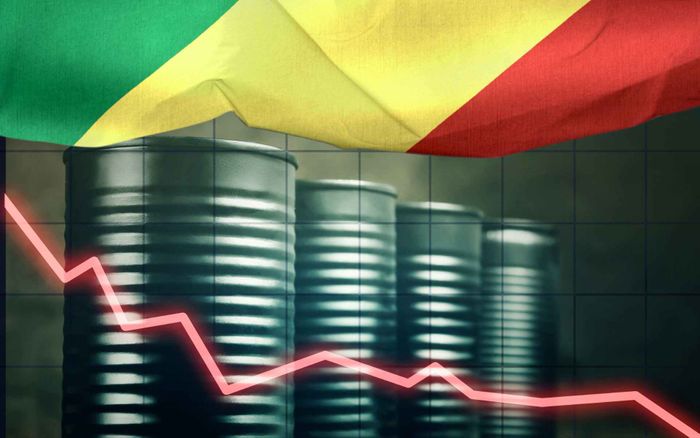
The Republic of Congo is adjusting its petroleum contract terms to support new upstream investment as the country seeks to raise production to 500,000 barrels per day. The Council of Ministers approved four bills that establish a single $90-per-barrel high-price threshold for the duration of selected production-sharing contracts (PSC). The amendments cover four permits held by Chinese operators – namely, Dingheng Mining's Nanga II Bis and Nanga IV and Oriental Energy's Nangua V and Marine XXIX – and aim to provide greater fiscal predictability, enabling operators to assess project profitability, secure financing and plan long-term exploration and development activities.
The measures reflect Congo's efforts to attract capital into both greenfield exploration and brownfield redevelopment as the country seeks to increase oil production and strengthen domestic crude supply. Investors will have an opportunity to engage directly with government officials on petroleum terms, available acreage and development opportunities at the Congo Energy & Investment Forum (CEIF) 2027, taking place June 1-3 in Brazzaville.
A Predictable Fiscal Framework for Investors
The amendments introduce a fixed $90-per-barrel threshold for the high-price mechanism throughout the life of the four contracts. This provides operators with a consistent benchmark for financial modelling while allowing the state to capture additional revenue when oil prices exceed the agreed threshold. The mechanism is distinct from the government's broader fiscal entitlements under the PSCs, which continue to apply regardless of whether crude prices reach $90 per barrel.
The African Development Bank has recommended that Congo capture additional revenue whenever crude prices exceed its budget reference price, set at $67 a barrel in the revised 2026 budget. For these four permits, however, Congo’s contracts took a different approach, sacrificing potential short-term revenue to support investment and secure supply for the Pointe-Noire refinery.
Congo’s Hydrocarbons Minister Stev Simplice Onanga defended the strategy before parliament, linking the adjustments to the expansion of Chinese operators. “Even at a lower price, we will have production,” he said, adding that “the volume we expect with the Chinese companies will be very significant.”
Exploration and Redevelopment Anchor Capital Requirements
The government’s revised petroleum terms are designed to keep capital flowing into projects that can expand production and strengthen domestic supply. Nanga II Bis, covering approximately 784 km² in the Kouilou Basin, illustrates this priority as it includes an initial exploration program valued at $100 million. Nanga IV also carries an expected $100 million exploration commitment, while Nangua V includes seismic surveys and exploration drilling, with estimated investment of $100 million.
Together, these three permits represent approximately $300 million in identified exploration programs, subject to the operators' development schedules and contractual commitments. The PSC amendments are designed to build on this momentum, attracting a fresh slate of capital across the upstream market.
Fiscal Challenges Reinforce Need for Private Capital
The country’s fiscal position reinforces the need for private investment. According to the World Bank, the economy is projected to grow by 4.4% in 2026, supported by higher oil prices, while elevated public debt and arrears continue to constrain fiscal flexibility. Sustaining upstream investment will therefore depend significantly on the ability to attract private capital and maintain commercially competitive project terms.
The August amendments provide a specific example of Congo's willingness to adjust contractual arrangements to support investment and CEIF 2027 will connect private capital to Congo’s emerging project opportunities. Convening investors, operators and service providers in Brazzaville, the event provides a platform for companies to engage directly with the Ministry of Hydrocarbons, national oil company SNPC and industry stakeholders on contractual terms, available acreage, investment requirements and potential partnerships. Congo’s evolving contractual frameworks will be a featured topic across the event’s program, while networking functions and tailored panel discussions will facilitate a new wave of dealmaking across the market.
Organized by Energy Capital & Power in collaboration with the Ministry of Hydrocarbons, CEIF 2027 takes place June 1–3 in Brazzaville. For more information and participation opportunities, visit www.congoenergyinvestment.com.