
Congo's Offshore Infrastructure Advantage Shortens the Path from Discovery to Production
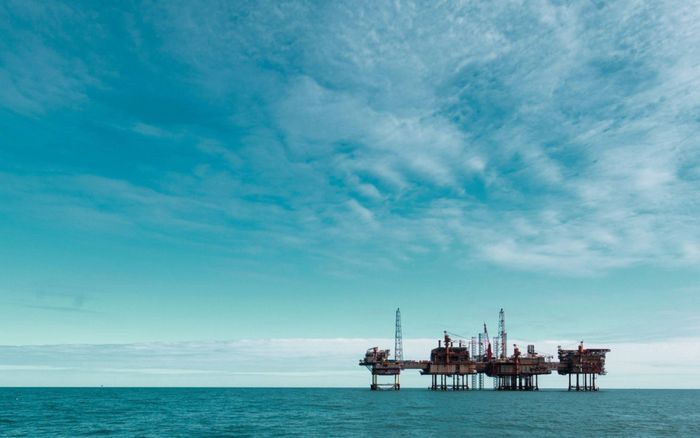
The Republic of Congo’s established offshore infrastructure offers a lower-cost route to new production. TotalEnergies' 2026 Moho G discovery demonstrates this potential, with the company developing the find as a subsea tie-back to existing facilities, rather than a standalone project. The well encountered a hydrocarbon column of 160 m in Albian reservoirs. Together with the neighboring Moho F structure, recoverable resources are estimated near 100 million barrels of oil equivalent.
For investors, this approach signals that Congo's installed offshore base of floating production units, pipelines and terminals allows operators to shorten the timeline between discovery and development. The upcoming Congo Energy & Investment Forum (CEIF) 2027, taking place in Brazzaville from June 1-3, 2027, will further explore this potential, connecting operators, policymakers and investors as the country pursues production of 500,000 barrels per day (bpd).
Existing Infrastructure Improves Project Economics
The Moho license covers 320 km², 80 km off Pointe-Noire. Two floating production units, Alima and Likouf, produce a combined 90,000 bpd and export through a pipeline to the Djeno terminal. The facilities provide an established production and export network that could support additional volumes from nearby discoveries.
Likouf started up in 2017 with 34 wells tied back to the facility. The Moho complex peaked near 140,000 bpd in 2019, about 50,000 bpd above current output. TotalEnergies has since committed more than $500 million to developing new wells at Moho Nord.
Nicola Mavilla, TotalEnergies' Senior Vice-President of Exploration, said the recent discovery "benefits from its proximity to existing production infrastructure, allowing a short-cycle, cost-effective tie-back development."
Mature Fields Support Additional Investment
Beyond Moho, independent operators are investing in offshore infrastructure and infill drilling to extend production from mature assets. Perenco installed its Kombi 2 platform on the Kombi-Likalala-Libondo II field for more than $200 million, adding associated gas recovery of about seven million cubic feet a day and 8 MW of power ahead of a six-well campaign. A five-well infill program at Tchibouela East added about 6,000 bpd on a field producing for almost 30 years.
Trident Energy is pursuing a similar infrastructure-led approach following its acquisition of operated interests in the Nkossa and Nsoko II fields. The company holds an 85% operated stake in the fields and is evaluating options to expand production. CEO Jean-Michel Jacoulot has also said the company is advancing plans for an offshore gas development involving an FLNG facility. Nkossa already handles gas transfers for Moho Nord, connecting the two developments through shared infrastructure.
Now, the opportunity lies in connecting new discoveries to infrastructure already in place. CEIF 2027 will bring operators, investors and government representatives together to assess which offshore developments can advance through existing production networks, attract financing and deliver additional oil and gas output over the coming years.
Organized by Energy Capital & Power in collaboration with the Ministry of Hydrocarbons, CEIF 2027 will enable candid dialogue, facilitating new investments and deals in the country’s energy sector. For more information, visit www.congoenergyinvestment.com.