
Nigerian Energy Companies Could Find New Opportunities in Congo's Hydrocarbon Sector
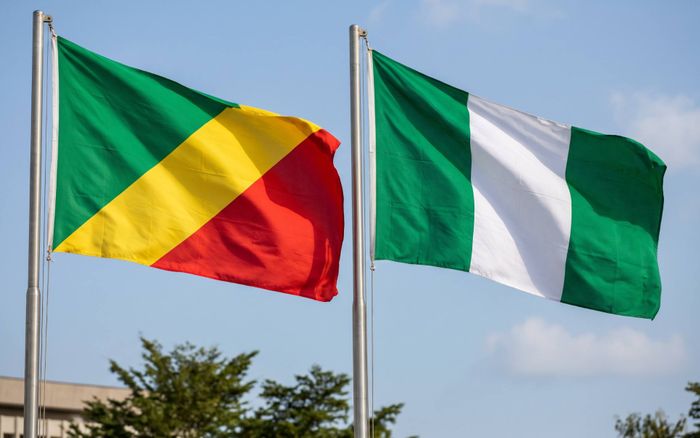
The Republic of Congo’s oil and gas sector is at a turning point. The country is targeting production of 500,000 bpd while seeking to capture more value from its resources for domestic consumption and strengthen local participation in an industry as it works to improve the implementation of its local-content framework. Achieving these ambitions will require experienced partners, investment and practical models to build domestic capacity. With decades of experience as Africa’s largest oil-producing country, Nigeria has developed one of the continent’s strongest local-content ecosystems. Nigerian companies now produce about 60% of the country's oil, a level of domestic participation Congo is working to achieve.
To study how the Nigerian Content Development and Monitoring Board builds local oil and gas firms, Congo's Hydrocarbons Minister Stev Simplice Onanga spent a week in Nigeria with a delegation of officials, representatives from the national oil company Société Nationale des Pétroles (SNPC) and local firms last September.
To date, only one Nigerian oil company has secured a foothold in Congo’s upstream sector: Pelfaco, which operates the Sounda block with a 60% interest. However two opportunities could change that; firstly, mature-field redevelopment and secondly, refined fuel supply, as output from CORAF (the country’s sole refinery) currently covers 60% of annual domestic consumption. Both challenges play directly to Nigerian operators' strengths, creating commercial opportunities likely to feature prominently when policymakers and investors convene in Brazzaville for the Congo Energy & Investment Forum (CEIF) 2027 from June 1–3.
Upstream: Mature Fields Match Nigerian Experience
Much of Congo’s oil production comes from mature offshore and onshore fields, many of which have been producing for decades and require continued investment to offset natural decline.
Undertaken by independent oil companies, brownfield redevelopment is already delivering additional production. Perenco has increased production from around 15,000 bpd in January 2017 to more than 32,000 bpd by the end of 2025 at its PNGF Sud oil field, thanks to a multi-year investment program combining infill drilling, well interventions and facility upgrades. Ammat Global Resources has also increased combined production at the Loango and Zatchi fields by 75%, from approximately 4,000 to 7,000 bpd. The gains followed a program of well workovers, ESP pump replacements, platform upgrades and subsea infrastructure modernization.
Nigerian indigenous oil companies with a track record of rehabilitating mature assets could be well positioned to enter the Congolese market. Seplat Energy, which acquired ExxonMobil’s Nigerian onshore and shallow-water business in 2024, restored 24 idle wells across its offshore OMLs 67, 68, 70 and 104 in H1 2026, adding 26,000 bpd of gross production capacity.
Similarly, following its acquisition of Eni’s Nigerian Agip Oil Company, Oando increased production from the OMLs 60–63 fields by 40%, from 21,301 boepd in 2024 to 29,733 boepd in 2025. The recovery was driven by improved facility and pipeline uptime, the reopening of shut-in wells and stronger output from the Ogbainbiri field.
Downstream: Could Dangote Address Congo's Fuel Gap?
On the downstream front, Congo presents opportunities for additional refining capacity and investment in fuel supply infrastructure. CORAF has a nominal capacity of 1 million tons per year but has struggled to process more than 600,000 tons.
Dangote Group could bring additional capacity and technical expertise to the market. Following the certification of its Nigerian refinery at 700,000 bpd last June, the group is pursuing further expansion plans, including a 1.4-million-bpd refinery in Nigeria and a 700,000-bpd project in Kenya. Its experience in developing and operating large-scale industrial facilities could offer value to Congo as it seeks to strengthen domestic fuel supply.
There are already signs of potential cooperation. Last June, an SNPC delegation led by CEO Maixent Raoul Ominga visited Dangote’s Lagos refinery. Discussions covered refining, fuel supply, energy security and technical knowledge-sharing. No agreement has been announced.
Both upstream and downstream opportunities remain at an early stage. CEIF 2027, could bring Congolese officials, Nigerian operators and financiers together to explore whether discussions can translate into concrete investment and commercial partnerships.