
Trident’s Brownfield Strategy Brings Congo’s Mature Fields in Focus Ahead of CEIF 2027
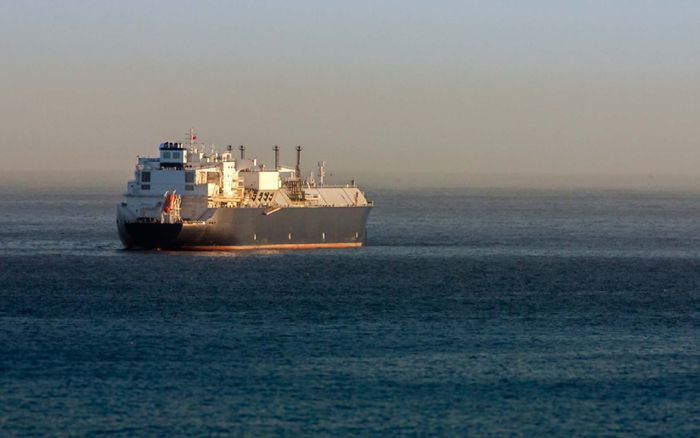
Trident Energy is advancing plans for a floating liquefied natural gas (FLNG) development in the Republic of Congo alongside a wider program to increase production from its mature offshore oilfields. The company is seeking a mid-sized FLNG vessel to monetize offshore gas resources while pursuing well stimulation, additional drilling and infrastructure optimization across its portfolio.
The developments highlight investment opportunities in Congo's established offshore assets ahead of the Congo Energy & Investment Forum (CEIF) 2027, taking place June 1–3 in Brazzaville. Bringing together operators, investors and policymakers, the forum will examine opportunities across upstream development, gas monetization and production optimization as Congo seeks to increase hydrocarbon output and attract capital into existing fields.
Gas Development Opens New Investment Opportunities
Trident is progressing an FLNG project associated with its Congo offshore operations, with plans to develop infrastructure capable of processing gas from offshore fields. The company has indicated that the facility could support gas monetization beyond its own producing assets, potentially creating opportunities for other operators to access shared processing infrastructure.
Speaking to Prospect at CEIF 2025, Trident CEO Jean-Michel Jacoulot outlined plans for the Nkossa Gas Project, including a proposed FLNG facility targeted for commissioning within three years of the interview. The company has since advanced its search for a suitable mid-sized FLNG vessel, although a final investment decision and confirmed commissioning schedule have not been announced.
The proposed development would add another route for commercializing Congo's offshore gas resources as the country expands its LNG industry and seeks to make greater use of gas produced alongside oil.
Extending Production from Mature Fields
Trident's Congo portfolio was established through its January 2025 acquisition of interests previously held by Chevron and TotalEnergies. The transaction gave the company an 85% operated interest in the Nkossa and Nsoko II fields, alongside a 21.5% non-operated interest in Moho-Bilondo and a 15.75% interest in Lianzi.
Nkossa and Nsoko II began producing in 1996 and 2006, respectively, and have approximately 30 producing wells between them. Trident plans to improve recovery through well revitalization, stimulation and additional drilling, using existing offshore infrastructure to support incremental production.
Replicating the Equatorial Guinea Model
This strategy has already proven successful in Equatorial Guinea’s Ceiba and Okume projects, where Trident invested $57 million in Okume Central to upgrade water injection and power capacity. The company also installed the country's first-ever electrical submersible pumps to improve well integrity, upgraded the Ceiba gas lift system with three permanent structures and launched a new deepwater drilling campaign. As a result, Trident increased production by 37% across assets that had already been producing for two decades.
Trident is seeking to apply a similar approach in Congo, where the Nkossa and Nsoko II licenses extend to 2040 and 2039, respectively. The remaining license terms provide a development window for investments aimed at improving recovery and extending productive field life.
Independents Target Congo's Brownfield Opportunities
Trident's development plans form part of a wider focus on mature-field investment across Congo's upstream sector. Perenco is pursuing infill drilling and well reactivation programs, while Ammat Global Resources is targeting higher output from its Loango and Zatchi fields. TotalEnergies is also evaluating the development of its Moho G discovery through a subsea tie-back to existing production infrastructure.
For independent operators, established offshore assets offer opportunities to increase production through targeted capital expenditure rather than relying exclusively on new exploration. Existing wells, processing facilities and geological data can reduce certain development costs and risks, although returns depend on reservoir performance, infrastructure condition and the scale of required investment.
Trident's proposed FLNG development adds a gas commercialization component to that strategy, potentially creating demand for offshore processing infrastructure, engineering services and additional field development.
As Congo seeks to sustain and expand hydrocarbon production, the progress of projects such as Trident's FLNG proposal and mature-field redevelopment program will help determine the next investment opportunities across its offshore sector – priorities that will be central to discussions at CEIF 2027.
Organized by Energy Capital & Power in collaboration with the Ministry of Hydrocarbons, CEIF 2027 will enable candid dialogue, facilitating new investments and deals in the country’s energy sector. For more information, visit www.congoenergyinvestment.com